
If you’ve ever watched your battery crawl down to 1% right when you need it most, you already know: how you charge matters. In this article we’ll cover practical, science-backed habits can dramatically improve both battery life and long-term health.
1. Live in the “comfort zone”: avoid 0% and 100% when you can
Try not to regularly let your battery hit 0%.
Plug in around 20–30% when it’s convenient, and unplug around 80–90% for everyday use. As a rule of thumb, keeping the battery roughly in the 20–80% range is ideal.
Avoid leaving your device at 100% for hours, especially overnight in warm rooms.
Batteries experience the most electrochemical stress at the extremes of their charge range. Spending less time near 0% and 100% slows wear and helps maintain capacity over the long run.
2. Keep things cool. Heat is the real battery killer
High temperature plus a high state of charge is one of the worst combinations for battery health.
Simple ways to protect your battery:
Don’t charge under a pillow, in direct sunlight, or on a car dashboard.
Avoid gaming or running heavy apps while charging—this adds extra heat.
If your device or power bank feels uncomfortably hot, unplug it and let it cool down.
Good power electronics and smart thermal design in your charger or power bank also make a big difference: efficient conversion = less wasted energy as heat.
3. Use the right chargers and cables
Choosing the right charging gear is just as important as your charging habits:
Look for USB-C Power Delivery (PD) support for phones, tablets, and laptops that use it.
Stick with reputable brands and certified cables rated for the wattage you need (e.g., 100W).
Avoid cheap, unregulated chargers. They can run hot, be inefficient, and in the worst cases damage your devices.
Pulsoniq 7 is built around USB-C PD 3.1, plus a USB-A port, so it works seamlessly with modern laptops, tablets, and phones while precisely managing voltage and current for both safety and compatibility.
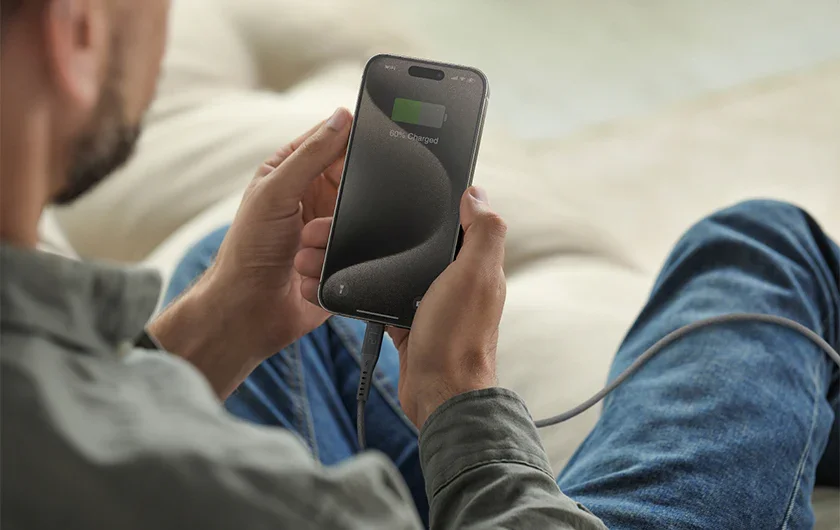
4. Fast charging vs. battery life: how to use it wisely
Fast charging is incredibly convenient, but it does put more stress on the battery—especially if:
The battery is already hot
You frequently charge from very low to very high
The device doesn’t intelligently manage current or temperature
Best practice:
Use ultra-fast charging when you need it (e.g., a quick top-up before heading out).
When you’re not in a rush—like overnight—switch to a slower, more battery-friendly mode if your device or charger offers one.
This is exactly the philosophy behind Pulsoniq’s Charge Control design, which lets users choose between rapid self-charging—just 7 minutes to 100%—or a 1-hour optimized mode that’s tuned for efficiency and long-term battery health.
5. Reduce how often you need to recharge
Another smart way to protect your battery is to use it less aggressively so you complete fewer full charge cycles overall. On phones and laptops:
Lower screen brightness and shorten screen timeout.
Turn off constant location tracking and unnecessary background apps.
Use power-saving modes when you’re mostly reading, browsing, or messaging.
These small changes can noticeably extend daily runtime, which means fewer full cycles and a longer overall battery lifespan.
6. Store batteries correctly
If you’re putting a power bank or device away for weeks or months:
Store it at around 40–60% charge.
Keep it in a cool, dry place—avoid hot cars and damp environments.
Top it back up to ~50% every few months if it slowly discharges.
This reduces stress on the battery’s chemistry and helps it “wake up” in good shape when you need it again.
How Pulsoniq 7 is built around charging best practices

Pulsoniq 7 is designed to match what batteries prefer in real life: controlled fast charging, low heat, and long-term durability.
Smart speed control – Charge Control lets you choose between a blazing 7-minute 0–100% refill when you’re rushing, or a gentler 1-hour mode that’s better for long-term battery health. You get speed when you need it, efficiency when you don’t.
Engineered for long life – Its custom lithium system is rated for 1,500+ cycles and is built to minimize the kinds of stresses (like lithium metal buildup and excess heat) that usually wear power banks out early. That means more years of reliable use before you notice any drop-off.
Serious power, safely delivered – With up to 140W USB-C PD 3.1 in and out, plus a USB-A port, Pulsoniq 7 can fast-charge modern laptops, tablets, and phones from a single, airline-friendly unit—while smart power management keeps voltage, current, and temperature in check.
All the charging tips above—avoiding unnecessary stress, managing heat, and using quality power delivery—are effectively built into Pulsoniq 7’s design, making it an ideal choice for anyone who cares about both speed and battery longevity.